Marine heavy transportOcean towageMarine engineering
Lifting the heaviestCrossing the deepest
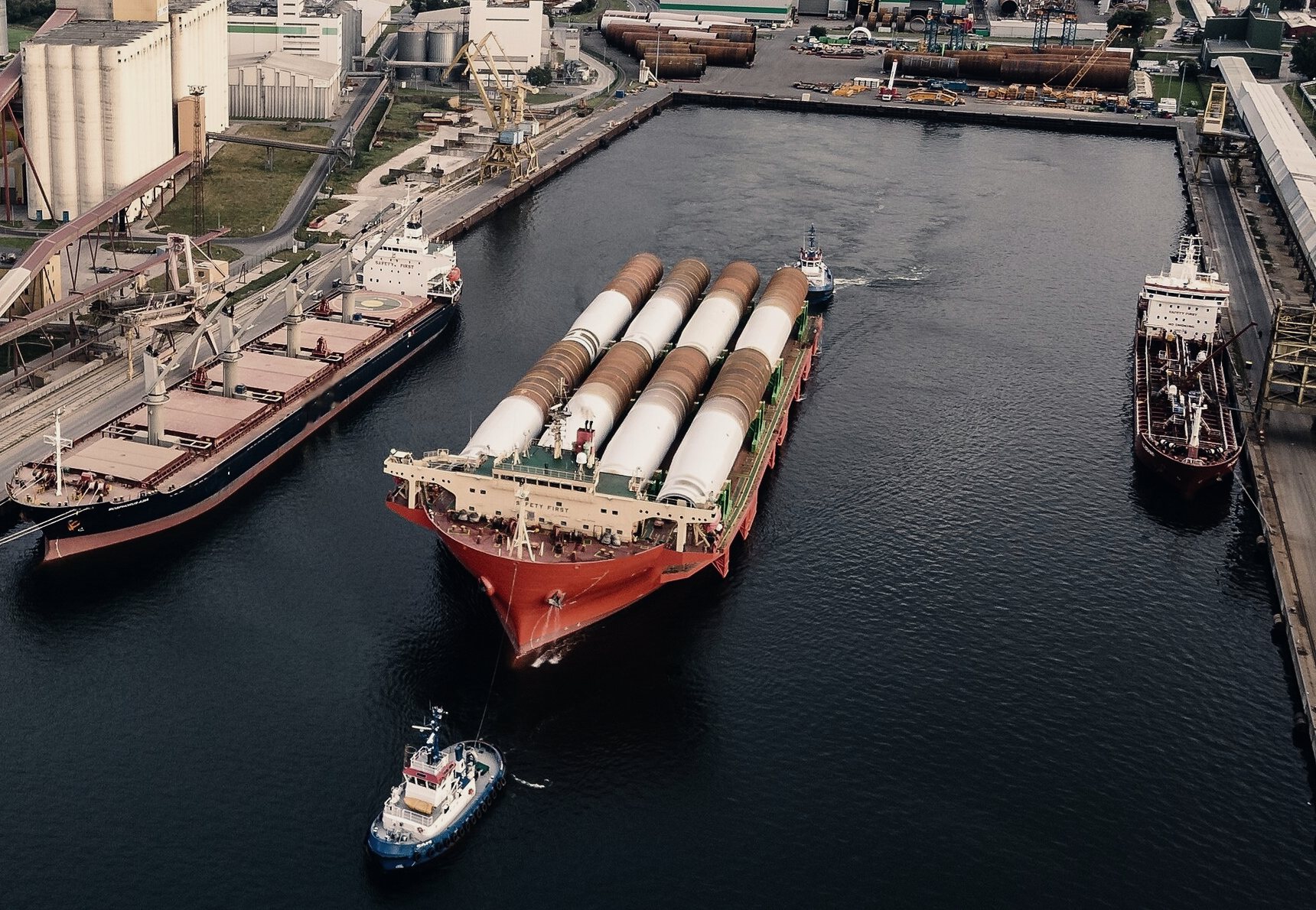
Trident Heavylift moves the largest things industry builds across open water: port cranes, wind farm foundations, platforms, modules and entire fleets of working vessels. We carry them on heavylift deck carriers and semi-submersibles or tow them afloat, and engineer, survey and supervise every passage from the yard to the site.
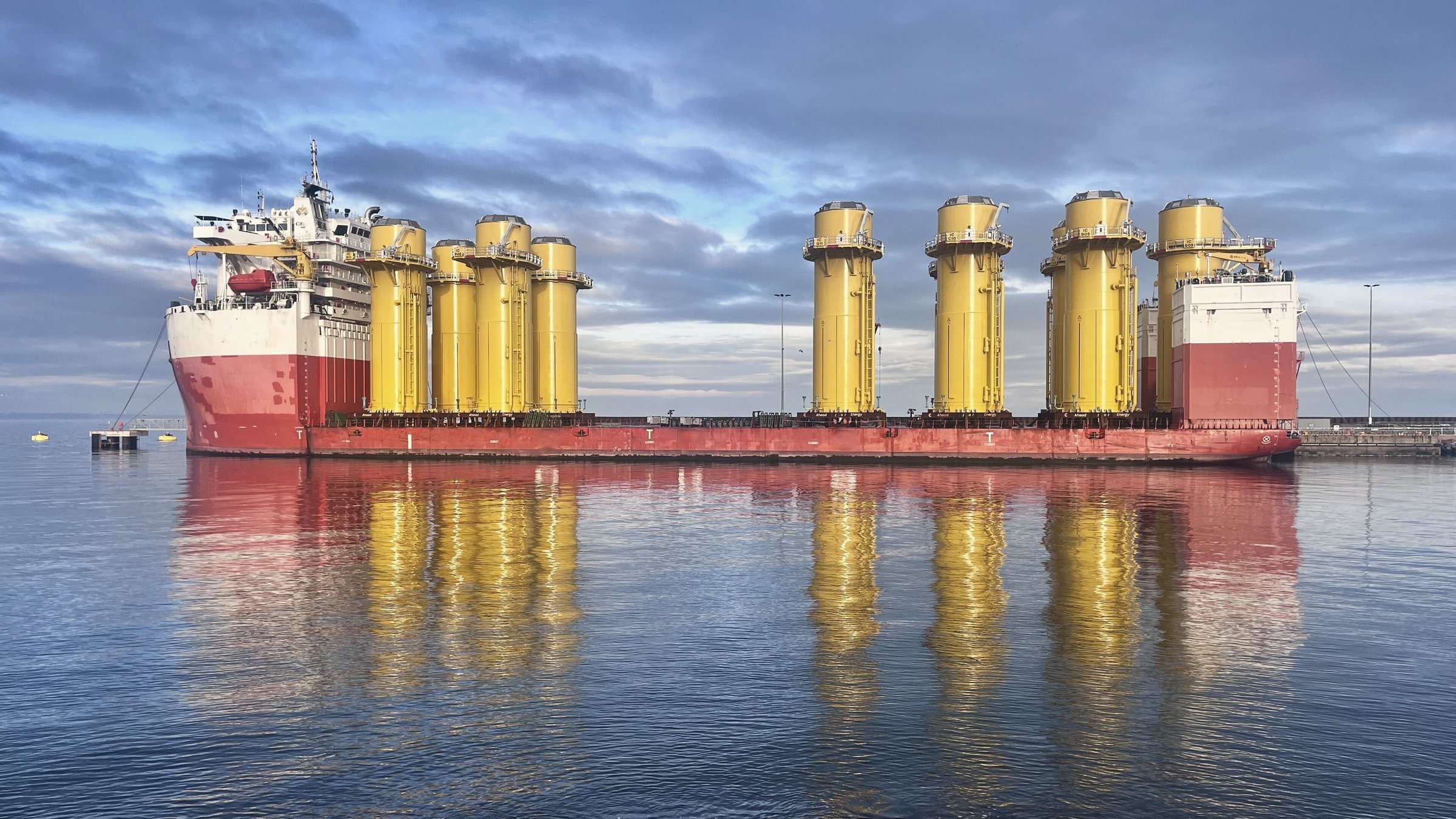
Monopiles for an offshore wind farm, outbound on a heavylift deck carrier

The field
Displacement
Some structures are born too large for the place they are needed. They are built in one hemisphere and spend their working lives in another.
A quay crane leaves the yard fully erected, taller than the terminal it will serve. Foundations for a wind farm arrive by the dozen, each one heavier than a train. A dredging fleet changes continents in a single voyage, with its tugs and pontoons stacked on one deck. Between the yard and the work lies only water, and water is the one road wide enough.
Marine heavy transport is the craft of that road. It is measured in tonnes by the ten thousand and in margins of a few centimetres, in weather windows, tide tables and sea states. Done well, it goes unnoticed. Something enormous is simply somewhere else.
To carry the heaviest things, a vessel must first learn to submerge.
What we do
Heavylift deck carriers
Port cranes, foundations, monopiles, modules and plant, lifted, rolled or skidded aboard and carried at full sea speed.
Semi-submersible heavy transport
Rigs, hulls, floating foundations and entire fleets of smaller craft, floated on and floated off.
Ocean towage & wet tow
Unpowered barges, floating docks, hulls and other buoyant cargo, towed afloat on their own hulls behind ocean-going tugs.
Offshore energy & heavy engineering logistics
Routes, vessels, ports and schedules, managed as a single plan from the fabrication yard to the site.
Manifest
What crosses the water
- Port & terminal
- Ship-to-shore cranesRTG cranesRail-mounted gantriesBulk handling plant
- Offshore wind
- MonopilesTransition piecesJacketsFloating wind foundationsOffshore substations
- Marine plant
- DredgersPiling bargesCrane bargesPontoonsTugsWorkboats
- Under tow
- Unpowered bargesLoaded deck bargesFloating docksConcrete caissonsDead-ship tows
- Oil & gas
- Jack-up rigsSemi-submersible rigsFPSO & FSO hullsTopsidesProcess modules
- Heavy industry
- Bridge spansReactors & columnsPlant modules
Ocean towage & wet tow
What floats, we tow.
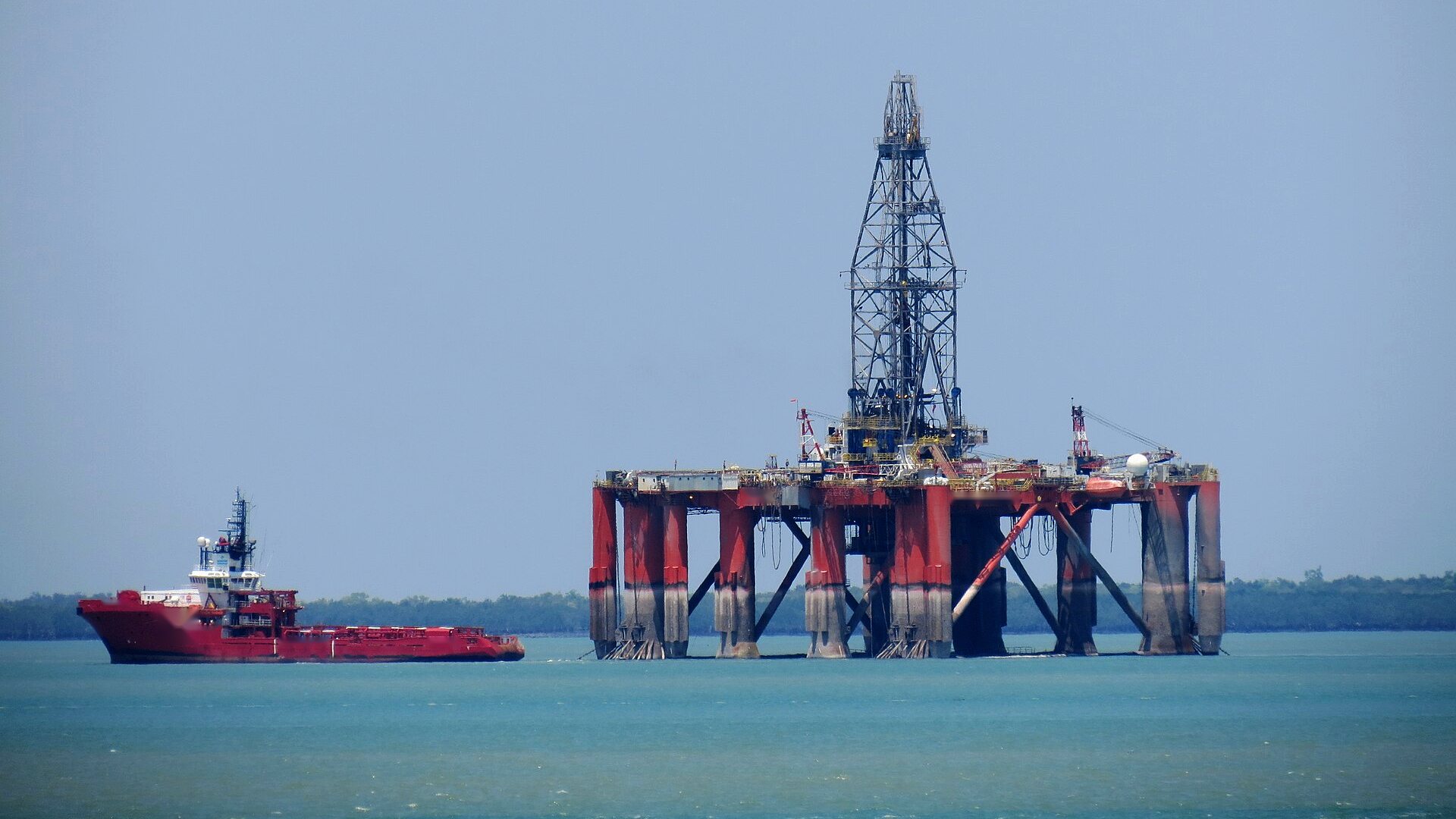
Some cargo is its own vessel. Drilling rigs, floating docks, barges, caissons and floating foundations cross the sea on their own buoyancy, at the end of a towline.
We plan the tow as one passage: tugs matched to the tow by bollard pull, the towing arrangement and emergency gear, stability and ballast of the tow, marine warranty approval, route and weather windows, and hand-over at the destination.
- Wet tow
- Cargo that floats on its own: rigs, floating docks, caissons and floating wind foundations.
- Barge tow
- Cargo loaded and seafastened on an unpowered deck barge, towed as one unit.
- Dead-ship tow
- Vessels without propulsion: new hulls, laid-up ships and units bound for refit or recycling.
Engineering & marine services
Engineered before it sails.
Weight is moved by calculation long before it is moved by sea. Our engineers, naval architects and marine surveyors carry each project from the first stowage sketch to the final set-down: the analysis, the approvals and the people on site when it counts.
01Transport & installation engineering
The calculations behind every voyage, loadout and lift.Stowage & seafasteningLoadoutFloat-over & lifts
- Stowage plans and transport manuals
- Vessel strength, motion and stability
- Grillage and seafastening design
- Lifted, SPMT and skidded loadouts
- Ballast, mooring and quayside checks
- Towing resistance and arrangement
- Float-over, jacket launch and upending
- Offshore lift and rigging design
02Vessel surveys & inspection
Independent eyes on the vessels and equipment a project depends on.Condition surveysOn / off-hireThird-party inspection
- Condition and suitability surveys
- Pre-purchase surveys
- On-hire and off-hire surveys
- Single-voyage surveys
- DP FMEA
- OVID / CMID inspection
- Rig and shipyard inspection
- Third-party inspection to code
03Hulls, floaters & fixed structures
Design and assessment for the units we move and the ones that stay offshore.Hull & conversionFixed structuresMooring
- Hull assessment and steel renewal
- FPSO, FSO and FSRU conversion
- MOPU conversion and life extension
- Jackets, topsides and WTG foundations
- Stability, hydrodynamics and model tests
- Finite element and fatigue analysis
- Quayside, mobile and permanent mooring
- Fabrication design and shop drawings
04Cable, riser & offshore wind
Engineering for the cable, the riser and the floating turbine.Cable layFloating windSubstation float-over
- Cable routing and lay analysis
- First-end, second-end and landfall pull-in
- Burial risk and cable protection
- Riser, pipeline and HDD pull analysis
- Floating wind and solar mooring
- Converter substation float-over
- Monopile saddles and seafastening
- Gangway workability and DP capability
05Project & site management
People in the yard, on the quayside and offshore.Project managementSite supervisionChartering advisory
- EPC project management
- Owner’s representative
- Bidding support and cost studies
- Port captain and site supervision
- Newbuilding and conversion supervision
- Vessel sourcing, chartering and S&P
- Lay-up and reactivation of assets
06Expert & independent review
Clear analysis when the stakes are high, or something has gone wrong.Root causeIndependent reviewExpert witness
- Third-party engineering review
- Root cause analysis
- Dispute support and expert witness
- Salvage engineering support
Select a discipline for the full scope
Analysis tools
- DNV Sesam
- OrcaFlex
- Bentley SACS
- GHS
- Optimoor
- ABS Eagle FPSO
- FEMAP / Nastran
- Caesar II
- Cadmatic
- AVEVA E3D
- Tekla
Standards
- DNV-ST-N001 Marine operations
- ISO 19901-6
- IMO guidelines for safe ocean towing
- Class and flag requirements
Typical passages
Cargo the size of buildings
Representative project types from across marine heavy transport.

Ship-to-shore cranes
Quay cranes shipped fully erected from the fabrication yard and rolled straight onto the rails of a new terminal.

A fleet in one voyage
Barges, pontoons, workboats and dredgers loaded together and delivered to a new project as a complete working fleet.

Jacket foundations
Wind farm jackets loaded in series, so that installation offshore never waits for steel.

Floating wind foundations
Floating hulls for deep-water wind, carried or towed from the assembly port to the field.

Substation and jacket, under tow
Topside and foundation loaded together on an unpowered deck barge and towed to an offshore wind farm by ocean-going tugs.

Integrated topside module
A complete process module carried from fabrication yard to field, set down ready to lift.

Contact
Bring us the weight.
For cargo, towage and engineering enquiries, charters and partnerships, write to us.
Opens your email with an enquiry template ready to fill in. Or copy the address and write to us directly.
To quote quickly, send us
- Cargo description and drawings
- Weight, dimensions and centre of gravity
- Origin and destination
- Ready date and delivery window
- Port or site constraints
Offices
-
Hong Kong
RM 616, Tower B, New Mandarin Plaza,
14 Science Museum Rd,
Hong Kong -
Shanghai
RM 08A, 60/F, Qiantan Center,
No. 555 Haiyang West Road,
Pudong New Area, Shanghai, China -
Tianjin
RM 612, Bldg A,
No. 1988 Yingbin Ave., CBD,
Binhai New Area, Tianjin, China